Voice-first support for
aging at home

Voice-first support for
aging at home

Exploring how voice interaction can simplify routines, memory and meaningful connection for older adults.

Exploring how voice interaction can simplify routines, memory and meaningful connection for older adults.

Team

Team

4-person multidisciplinary team

4-person multidisciplinary team

Project Type

Project Type

UX/Product Design (Tablet)

UX/Product Design (Tablet)

Timeline

Timeline

Nov–Dec 2025

Nov–Dec 2025

Role

Role

Creative Technologist + UX Collaborator

Creative Technologist + UX Collaborator

Focus

Focus

Voice UX · Accessibility · AI Interaction

Voice UX · Accessibility · AI Interaction

Tools used

Tools used

Figma, Figjam, Voiceflow

Figma, Figjam, Voiceflow

Project Overview

Reminisc is a voice-first concept exploring how technology could support older adults aging at home through routines, memory engagement and family connection. The project investigated whether conversational interaction could reduce some of the friction created by navigation-heavy digital experiences.

works image
works image
works image

Phase 1 - Research

Understanding the space before designing the product

We explored aging at home, voice interaction, accessibility, emotional connection, and trust.

Evidence at a Glance

18

First-time smart-speaker users

Voice felt approachable, but users struggled with commands, system limits, and privacy.

20

Long-term smart-speaker users

Voice became useful when it naturally fit routines, reminders, information, and everyday life.

425

Older voice-assistant users

Emotional value and perceived companionship influenced continued use.

115

Privacy-study participants

Voice technology raised questions around recording, monitoring, and data control.

Why Voice?

Why Voice?

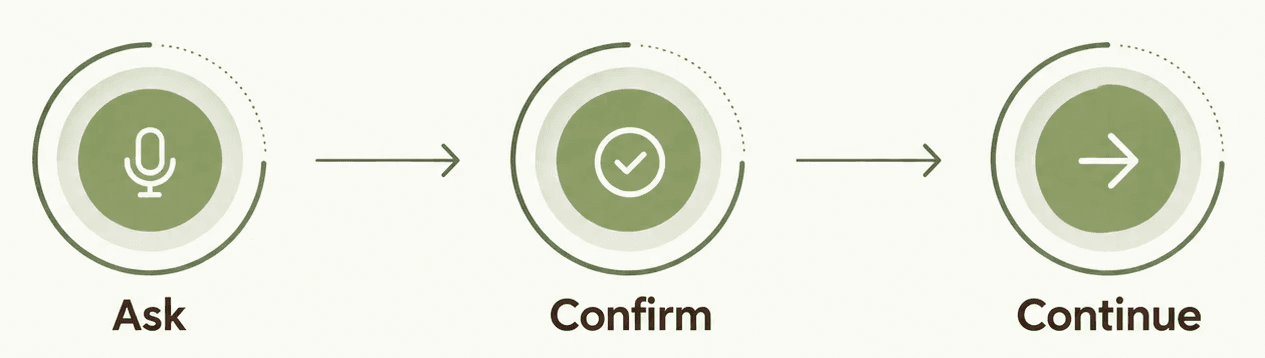
A simple interaction model for older adults at home

A simple interaction model for older adults at home

Listening state
Is it hearing me?
Confirmation
Did it understand?
Recovery
What if it didn't?

Competitive Landscape

Competitive Landscape

What already exists?

What already exists?

The opportunity wasn't another emergency device or chatbot — it was connecting routine, memory, voice, and human relationships.

Research Synthesis

Research Synthesis

01

REDUCE EFFORT
Fewer steps. Fewer menus.

02

FIT THE ROUTINE
Useful enough to become habitual.

03

MAKE VOICE VISIBLE
Listening, confirmation, recovery.

04

KEEP PEOPLE CONNECTED
Technology supports relationships.

05

BUILD TRUST
Clear control over voice and data.

Insight → Design Principle

Insight → Design Principle

The Gap we Identified

The Gap we Identified

Existing solutions often addressed safety, accessibility, or companionship independently. We saw an opportunity to connect voice, routine, memory, and family interaction within one simple experience.

PROBLEM

PROBLEM

The Problem

Older adults aging at home may need support managing routines, recalling meaningful information, and staying socially connected — without navigating another complex digital interface.

Older adults aging at home may need support managing routines, recalling meaningful information, and staying socially connected — without navigating another complex digital interface.

How might we use voice to make everyday support simpler, warmer, and easier to trust?

HMW

HMW